Medical
Magnesium in Long Emergencies: Muscles, Nerves and Heart Without Supplement Myths
Magnesium is essential for muscle, nerve and heart function. Build it into a long-duration food plan, recognise real loss risks and avoid unsafe supplement shortcuts.
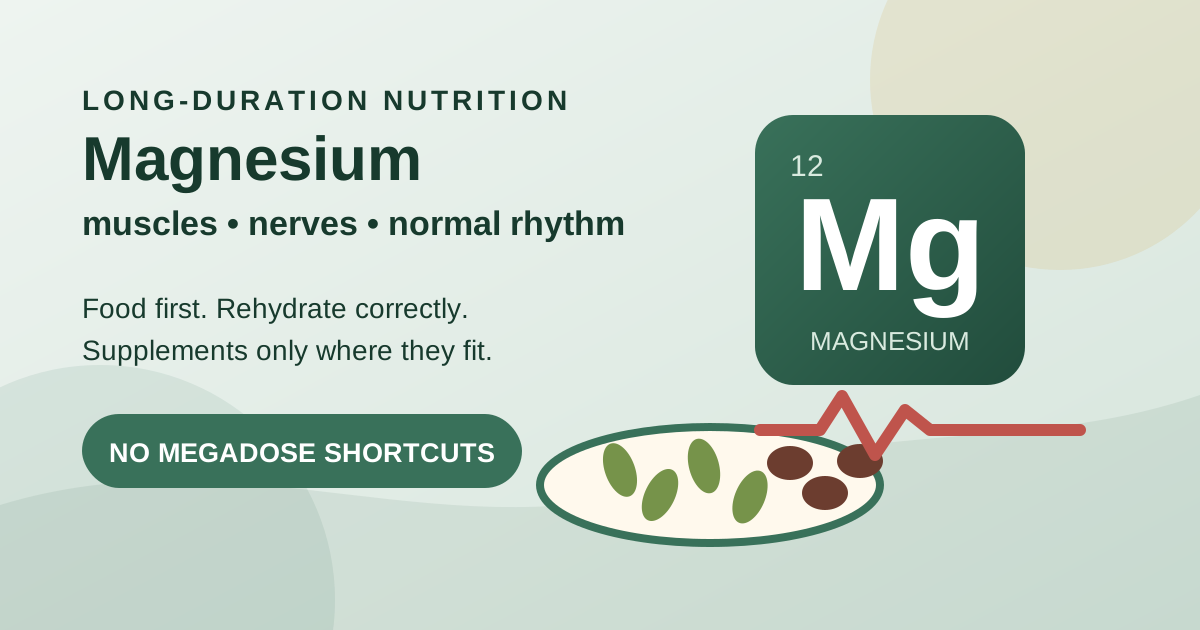
Magnesium deserves a place in long-duration emergency planning for a simple reason: it is essential. The body uses it across hundreds of enzyme systems involved in energy production, protein synthesis, blood glucose and blood pressure regulation. It also helps move calcium and potassium across cell membranes, which matters for nerve signals, muscle contraction and normal heart rhythm.
Essential does not mean more is always better
Why a long food disruption changes the calculation
A few days of basic emergency food will not normally create magnesium deficiency in a healthy adult. The kidneys conserve magnesium when intake falls. The risk becomes more relevant when a restricted menu lasts for weeks, when refined grains replace whole foods, or when illness causes repeated losses. Diarrhoea, vomiting, gastrointestinal disease, diabetes, alcohol dependence, older age and some medicines can all alter magnesium status.
How much is the planning reference?
EFSA sets adequate intakes for adults at 350 mg per day for men and 300 mg per day for women. US recommended amounts range from 400 to 420 mg for adult men and 310 to 320 mg for adult women. These are total dietary planning values, not instructions to swallow that amount as a supplement.
Food and tablets use different limits
The shelf-stable magnesium pantry
A food-first plan is practical because magnesium-rich staples also provide calories, protein, fibre and useful fats. Rotate foods your household already eats.
- Pumpkin seeds: about 156 mg per 28 g serving.
- Chia seeds: about 111 mg per 28 g serving.
- Almonds: about 80 mg per 28 g serving.
- Canned black beans: about 60 mg per half cup.
- Peanut butter: about 49 mg per two tablespoons.
- Brown rice, oats, whole-wheat bread and fortified cereals: moderate contributions that add up across meals.
- Canned fish, long-life milk or fortified alternatives: useful additions to a more complete ration.
Keep the whole grain
Losses matter more than vague symptoms
Early magnesium-deficiency symptoms — reduced appetite, nausea, fatigue and weakness — are nonspecific and overlap with dehydration, infection, sleep loss and under-eating. Severe deficiency can cause tingling, muscle contractions, cramps, seizures and abnormal heart rhythm, but those are reasons for medical assessment, not self-diagnosis from a symptom list.
After vomiting or diarrhoea, rehydrate first
When a supplement may belong in the kit
A modest supplement can be a backup when a clinician or pharmacist identifies a likely dietary gap or a specific medical reason. Check the label for elemental magnesium rather than the total weight of the compound. Citrate, chloride, lactate and aspartate forms tend to be absorbed more completely than oxide, but tolerability, dose, cost and medical context matter more than marketing.
- Keep it in the original labelled container with expiry date and dose.
- Record it on the household medication list.
- Do not use laxatives or antacids as an improvised daily magnesium supplement.
- Separate magnesium from certain antibiotics and osteoporosis medicines exactly as the pharmacist advises.
- Review diuretics and long-term acid-reflux medicines with a clinician because they can alter magnesium levels.
- If kidney function is reduced, do not supplement without medical guidance; the kidneys may not clear excess magnesium safely.
What magnesium cannot promise
Magnesium is necessary for normal heart rhythm and muscle function, but routine supplements have shown only small average effects on blood pressure. A cramp during heat, heavy work or poor hydration is not proof of magnesium deficiency. No tablet makes dehydration, sleep deprivation or excessive physical effort safe.
Key takeaway
For a long emergency, secure magnesium mainly through a rotating pantry of seeds, nuts, beans, whole grains and fortified foods. Keep oral rehydration supplies for fluid loss and prescribed medicines uninterrupted. A magnesium supplement can be a targeted backup, but it is not a universal treatment for stress or cramps — and kidney disease, medicines and excessive doses can change it from useful to dangerous.
Contains affiliate links. Provision may earn a commission if you buy through them, at no extra cost to you. This does not affect our recommendations.