Medical
The Medication Fridge: Keeping Insulin and Meds Cold Without Power
Insulin, EpiPens and some vaccines lose potency silently when they get warm. A practical, low-tech plan to hold the cold chain through an outage — and where stored power fits in.
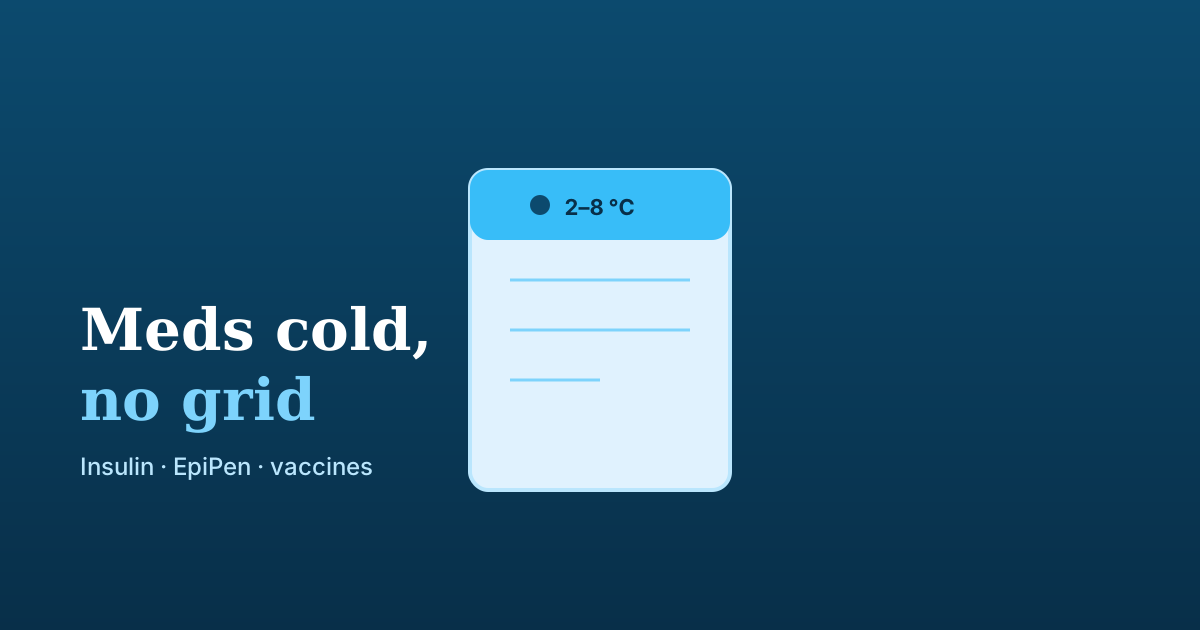
For most supplies, a warm fridge for a day is an inconvenience. For insulin, many biologics, adrenaline auto-injectors (EpiPen) and some vaccines, it is a silent failure: the medicine loses potency you cannot see, and a dose that looks fine no longer works when you need it. This guide is about holding the cold chain through an outage with the least equipment — and where a bit of stored power earns its place.
Know your window first
Do not guess. Read the patient leaflet for every medicine you depend on. Rules of thumb: insulin is usually fine for about 28 days once opened if kept at or below roughly 25–30 °C, but it must never freeze (frozen insulin is destroyed). Many vaccines and biologics want a tight 2–8 °C. The number that matters is the one on your specific box, not a generic rule.
Never freeze insulin
Passive cold: no power needed
- Pre-chill before the event — freeze gel packs in your normal fridge/freezer now, so they are ready the moment the power dips. A chest cooler with cold packs holds 2–8 °C for a day or more.
- Insulate — a rigid cool-box beats a soft bag; line it, close it, and open it rarely. Every opening bleeds cold.
- Buffer with mass — a bottle of cold water or a frozen gel brick gives thermal inertia, so a brief warm spell does not cross your limit.
- Keep it shut and shaded — a cooler in a cool, dark room outlasts one in the sun by hours.
A thermometer is the whole plan
Where stored power earns its place
A 12 V medical mini-fridge (the kind sized for a few vials) running off a power station keeps the band hands-free for days — exactly the use case the energy-autonomy section sizes. The trick is rotation: keep one gel pack in the cooler and one on the station's fridge output, swapping them so you never rely on a single failing battery. See the energy-autonomy article for how much panel and station that takes.
- A power station + folding solar panel can run a small medical fridge through a multi-day blackout (recharge in daylight).
- Prioritise: fridge for meds first, then phone/comms — a cooler with packs is your passive backup if the battery runs low.
- Ventilation: any powered fridge needs airflow; don't bury it in a sealed box.
Tell spoiled from safe
- Insulin: clear, colourless. Cloudiness, crystals or a colour shift means discard (and call your clinician/pharmacy about a replacement).
- EpiPen / auto-injectors: the fluid should be clear; a colour change or particles means do not use.
- Vaccines / biologics: follow the cold-chain label; if it has been warm past the stated window, treat as compromised and ask a professional — do not guess.
Paperwork that saves you
The takeaway
Key idea
Cold-chain medicine fails silently, so manage it by the thermometer, not by hope: pre-frozen packs in an insulated cooler buy the first days free of power, and a small station-run fridge carries you through a long blackout. Know each medicine's real window, never freeze insulin, and keep the paperwork that gets you a replacement.
Contains affiliate links. Provision may earn a commission if you buy through them, at no extra cost to you. This does not affect our recommendations.